The entertainment industry is seeing a significant shift in the way people play, watch, communicate, and interact online with technology advancing. Metaverse Gaming is one of the most promising breakthroughs in this digital transformation, with the game becoming a seamless blend of gaming, virtual environments, social interaction, digital economies, and new technologies like virtual reality and augmented reality.
Metaverse games are designed to offer persistent virtual environments that allow players to socialize, interact, explore, create, work, and entertain themselves, as opposed to the traditional gaming experience that is usually linear and primarily about completing missions or competing with others.
The world of immersive digital entertainment is becoming more and more common as internet connectivity, cloud computing, artificial intelligence and virtual reality devices and blockchain technologies continue to evolve. Overall, Metaverse Gaming could revolutionize the way people experience entertainment, with the promise of more immersive, personalized, and community-oriented experiences.
What is Metaverse Gaming?
Metaverse Gaming is an interactive gaming experience in which the players can engage in various activities that go beyond the conventional gaming experience in persistent virtual worlds. The settings can enable users to develop avatars, navigate digital settings, connect with players, engage in occasions, modify the digital world, and occasionally possess or exchange digital belongings.
Playing a traditional video game usually involves following a set of rules and goals. Games in the Metaverse can, however, provide more open-ended experiences. Players get to choose the activities they want to engage in within the virtual space, which makes it more of a digital universe than a traditional game. From gaming to social interaction, entertainment to digital commerce, Metaverse Gaming emerges as a pivotal influencing force in the future of online experiences.
What Makes Metaverse Gaming so Popular?
Metaverse Gaming is gaining momentum due to several technological and social trends. There is more and more a demand for more and more modern gamers to experience a game that will allow them to interact with friends and community instead of having to compete against computer-controlled opponents.
It offers users a way to interact with one another through their avatars, voices, events and activities. Players can join virtual concerts, engage in competitions and explore digital environments and interact with communities from around the world.
Technological advancements are another significant one. More affordable immersive devices, better graphics processors, faster Internet connections and cloud gaming systems are aiding the development of more detailed virtual environments.
Online communities have also gained popularity, which has raised the expectations. Individuals are already familiar with communicating, shopping, viewing entertainment, and developing relationships online. Many of these activities are combined in interactive digital environments by Metaverse Gaming.
What is the impact of Metaverse Gaming on Entertainment?
The most significant change that Metaverse Gaming brings to the entertainment sector is that it moves from a passive mode to an active one. Audiences are traditionally expected to watch a film, television program, concert or sporting event. Virtual environments allow users to enter the picture and become active.
Envision a virtual concert where your avatar roams around a virtual venue, engages with other avatars, and can actively take part in the concert’s activities. Likewise, a movie studio could develop an interactive virtual world around a popular movie series where movie fans can explore the movie’s locations and interact with the characters within the virtual world.
This change establishes a new dynamic between producers and viewers. Users can not only consume content they can also be involved in experiences, shaping communities and sometimes even producing their own content.
What is the Role of Virtual Reality?
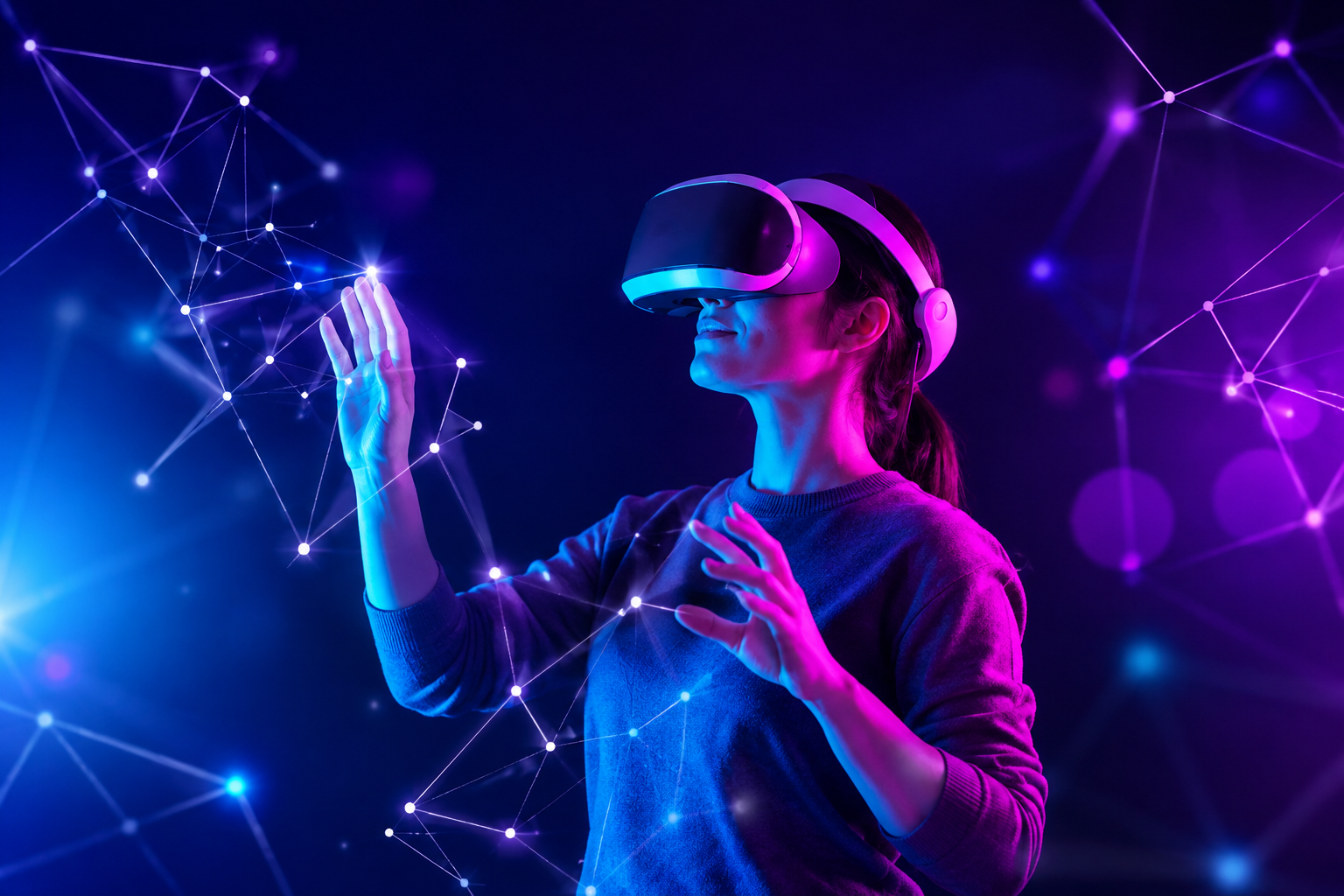
VR is one of the key technologies that can enhance the experience of Metaverse Gaming. VR headsets can create a sense of presence by immersing users in a virtual setting. With the right equipment, players can explore virtual environments, interact with virtual objects, communicate with other players, and engage in immersive activities. This can make entertainment experiences more engaging than the traditional screen games.
But, it’s not just a VR technology. The Internet and smartphones can offer access to virtual experiences, augmented reality can merge digital and real-world content, and gaming consoles can be used to access virtual experiences without the need for a special headset. With the use of immersive technologies becoming more comfortable and accessible, it may become a more regular part of daily entertainment.
What Makes Metaverse Gaming a Social Experience?
Social interaction is one of the most essential aspects of Metaverse Gaming. Previous multiplayer games have proven the popularity of online communities, but the metaverse can extend the definition of social interaction to create persistent environments in which people can meet even when they aren’t playing a game.
Players can build virtual communities, attend events, join in discussions, join in projects or simply spend time together. These activities can help bring digital entertainment closer to real-world social situations.
Another crucial opportunity is a virtual event. Competitions, concerts, exhibitions, festivals, educational activities, brand experiences are just a few options for what can be done on a gaming platform. This opens new avenues for entertainment services to be available to a worldwide audience, without requiring the presence of people in certain areas.
What Opportunities are Available to Game Developers?
With the rise of Metaverse Gaming, there are fresh possibilities for developers and creative professionals. Rather than creating a game that users finish and put aside, the companies can create persistent virtual surroundings that are continually refreshed and added with new experiences.
Developers have the ability to build virtual economies, socialization, user customisable content systems, interactive events and customizable environments. These features can help to boost engagement and attract players to return to the game.
The metaverse also offers a chance to artists, designers, musicians, programmers, storytellers, marketers, community managers, and others. Expertise in a multitude of creative and technical disciplines may be needed to achieve a successful virtual world. This may lead to increased integration and connectivity between the gaming sector and other entertainment and digital media segments.
What Impact Can Digital Economies Have on Metaverse Gaming?
Another important aspect of Metaverse Gaming is digital economies. In some virtual platforms, the users can buy cosmetics, accessories, virtual spaces or other digital content.
Developers are also able to offer these economies other business models, and creators can find opportunities to monetize their content. Users can create virtual clothes, settings, art or other virtual experiences, for instance.
But digital economies need to be managed as well. Ownership, payments, security, refunds and protection of users should be well defined rules for the developers. Users should be able to generate value from a sustainable virtual economy, but not to the detriment of their health.
Why User-Generated Content?
Content created by the users can be a significant part of the expansion of Metaverse Gaming. Rather than leaving it up to professional developers to develop all aspects of a virtual world, platforms can introduce tools that enable users to develop their own experience.
Players might be able to make virtual environments, create games, arrange events, make digital art, or build interactive stories. This can create more dynamic virtual worlds, as the community can create new content. UGC also promotes creativity and ownership. Individuals can no longer be consumers, but creators of digital entertainment.
What are the Potential Issues in Metaverse Gaming?
However, there are some hurdles that Metaverse Gaming has to overcome in order to become successful. One of the primary concerns is privacy, as immersive environments can gather extensive information from users.Another key concern is data security, as these digital experiences can collect a lot of information from users.
Another issue of concern is online safety. Harassment, inappropriate behavior, scams and other risks are issues that virtual communities must deal with. Moderation systems and community standards are critical for developers to build safe spaces.
Accessibility may also be an issue. Not all individuals might have access to good VR hardware, strong computer systems, and dependable web connections.Access to premium VR devices, robust computers, and steady internet connection could be inaccessible to some. Developers should then account for the various hardware capabilities and develop experiences that can reach a wider audience.
The issues of digital ownership, IP and monetization, and platform reliance are also raised. To ensure growth over the long term, it is important to overcome these challenges.
What Will AI Bring to the Metaverse Gaming Space?
AI might revolutionize Metaverse Gaming by bringing more personalization and responsiveness to virtual environments. AI-generated characters can be more natural to interact with players, and intelligent systems can be used to create environments, stories, missions, and more. AI can help enhance personalisation as well. A virtual world might be capable of modifying activities and recommendations based on the player’s interests and activity.
Another idea is to moderate. AI systems can identify harmful content, recognize suspicious behavior, and provide assistance to human moderators to keep online communities safe. Virtual environments might be even more interactive and interactive as AI technology evolves.
What is the Future of Metaverse Gaming?
As the Metaverse Gaming revolution continues, the future is expected to see more seamless connections between gaming, entertainment, social interaction, commerce and digital creativity. Online virtual environments could be places to do much more than play games.
Interactive entertainment experiences might be possible on future platforms with games, concerts, movies, shopping, education, social experiences, and creative experiences. Users can switch from one experience to another, using the same digital identity or avatar.
The creation of these environments will rely on technological advancement, user acceptance, business models, safety measures, and accessibility, though. The more successful platforms are going to be those that are going to build something useful and fun, not something for the sake of the technology.
Conclusion
Metaverse Gaming is a significant development in the entertainment sector, blending interactive gaming, social interaction, immersive technology, digital creativity, and virtual experiences to offer a unique experience. It can revolutionize the entertainment viewing experience, making people more than just observers but active participants.
While the privacy and accessibility constraints, security issues, moderation measures, and digital economies challenges persist, the future of virtual entertainment seems to be promising more sophisticated elements in these innovations. Metaverse Gaming could play a pivotal role in the future of digital entertainment, serving as a key player in the evolving world of the Metaverse. Metaverse Gaming has the potential to become a significant player in the future of digital entertainment, contributing to the continuous evolution of the Metaverse landscape as developers, creators, brands, and technology companies push the boundaries of possibilities.
As society moves towards a new generation of games, virtual worlds that persist after closing and offer more than just viewing are emerging, and the future of entertainment might be more about entering, exploring, creating, and experiencing than watching or playing.