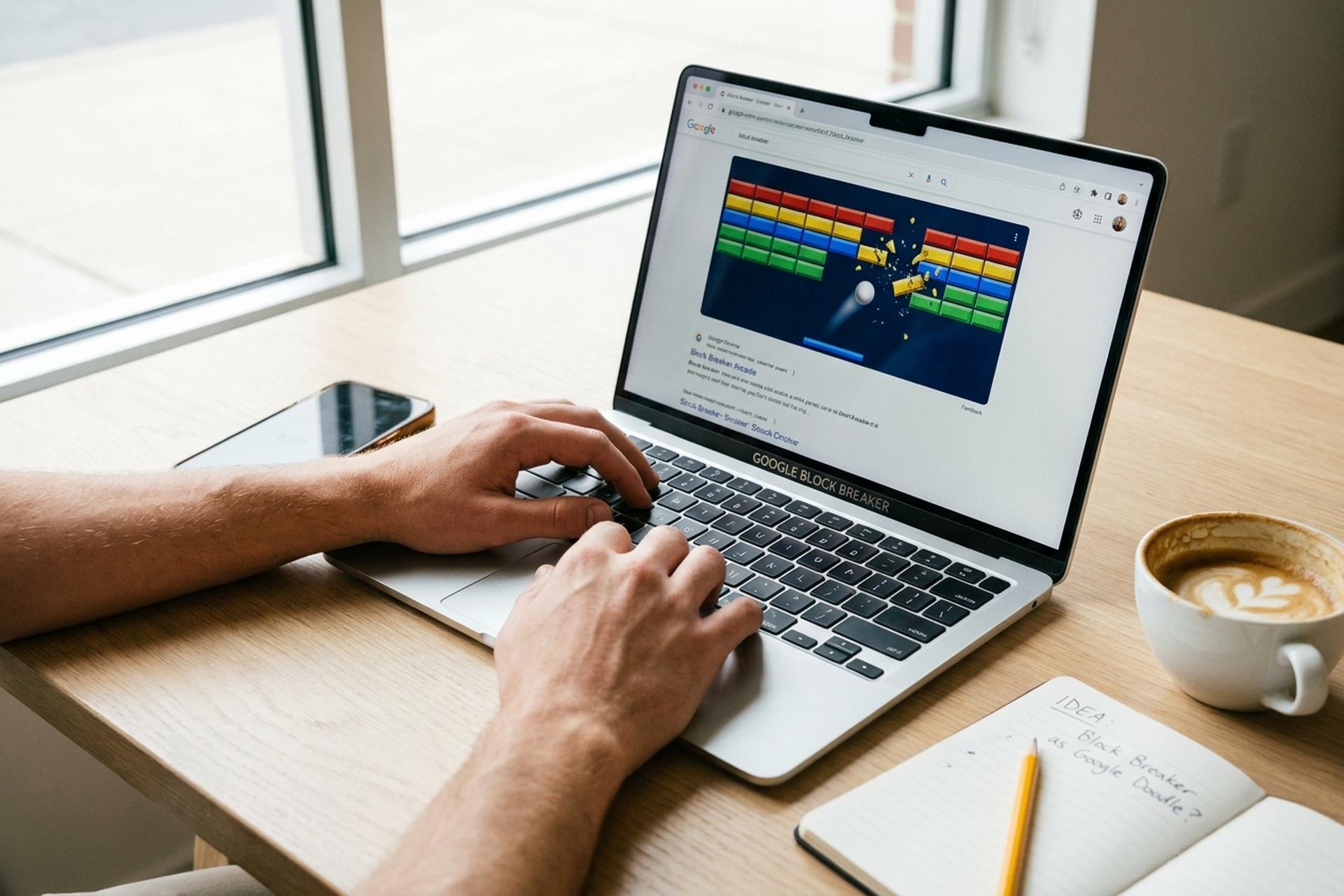
Block breaker is a basic concept of an arcade game, breaking of blocks with a moving paddle or whatever and to try to get the maximum points possible. Games of this type are very simple to understand, but can be quite difficult. Reaction speed, predicting movement, controlling angles, and avoiding loss of ball/player are generally requirements for the players.
The popularity of block breaking games comes from their straightforward gameplay. There is no need to have a lot of experience in gaming to start playing. Rather, the real key to success is timing, concentration, positioning and practice. For many people, they may be playing block breaker for the first time, or simply attempting to break a score, knowing the basics will make it a lot more enjoyable.
What Is Block Breaker?
It is the game that is commonly known as block breaker, which the players find or play through game pages and search pages of Google. This is just a brick breaker arcade game, but with a twist: a player is in charge of a bouncing ball and a paddle with which to break the bricks.
It is usually the case that the goal is simply to maintain the ball in play and to try to break as many blocks as possible. The game can contain different types of levels, block settings, powerups, difficulty and/or scoring systems, depending on the version. As block breaker games can take various forms, it’s important to consult the instructions and controls for the version being played.
What is the Working of Block Breaker?
The basic rules of play are typically simple. A ball orbits across the “playing area” and rolls off walls, blocks and onto a player-controlled paddle. If the ball bounces off a breakable block, the player moves forward or scores a point, whichever is applicable, and the block is knocked out or broken.
The player is responsible for moving the paddle across the screen to get it under the ball before it hits the bottom of the screen. If the paddle is able to block the ball, it will bounce back into the playing area. In the challenge the ball can move in a different direction after colliding, making it harder. It is therefore very important for players to always watch its movement and accurately determine its location, then position the paddle in that location to play the ball.
So What is the Primary Goal?
The main goal of the game block breaker is to destroy blocks and maintain ball activity for as long as possible. The more blocks are destroyed, the more progress you make and better your score will be. Depending on the version, players may need to complete an entire level to progress. Others may seek to get the maximum number of points in a minimum amount of tries. It is helpful to know the actual scoring system of the game you are playing as the scoring system may vary in different versions.
What is the Point of Having a Schedule?
One of the key factors in most block breaking games is timing. The paddle’s placement needs to be right before the ball hits. The ball may go past the paddle if it’s moved too early or too late. Players should not chase the ball with a random motion but rather track the ball. Through observation, you can determine where it will land in the bottom of the playing area. With practice, players can improve their ability to anticipate the direction of the ball. This can allow for more strategic and less reactive gameplay.
What Do You Have to Do to Get More Points?
To improve score in block breaker, accuracy, patience and strategy are required. Rather than just glide paddle continuously, focus on predicting where the ball will go. A good idea is to keep a firm hold on the paddle while following the ball’s angle. Avoid unnecessary movements as excessive movement will make it more difficult to position the paddle accurately. A failure is another opportunity to learn, too. If you continue to lose the ball in the same position at the same time in the next round, determine what went wrong and correct it in the next round.
To Learn About the Ball’s Movement
The best way to get better is to learn how the ball reacts when hitting different surfaces. The ball may bounce off blocks, off walls or off the paddle, and change direction as a result. Be aware of these changes during play. As you play more rounds, you may start to see the same patterns, and understand where the ball is going to go. This skill is especially helpful if the ball begins to speed up. You can place the paddle ahead of time, rather than reacting at the end of the game.
We Should Always Keep our Paddle Under Control
Newbies often make the error of paddling too hard. Unnecessary and large movements can hamper an accurate position. Avoid jerky movements as much as possible. If the ball is coming towards you, it may be unnecessary to swing the paddle wildly to one side. Having the paddle under control can provide a greater time to react and minimize hits.
Concentrate on the Ball Rather than the Blocks
While the obvious goal is to block breaker, the immediate goal is generally to keep the ball in play! Players can sometimes wander off of what they want to hit next, and forget the location of the ball. Keep eye on the ball and use the paddle to keep the ball active. After mastering the fundamentals, you can begin considering where to attack the block arrangement.
Make the Most of Useful Angles
Some brick-breaker games involve the angle at which the ball is struck by the paddle, which determines where it will go next. Knowing how to move the angle can be useful to the player in controlling the direction of play.
Test various areas of the paddle if allowed to change the trajectory of the ball based on the hit location. The angles may vary depending on where the ball is struck. This will make it easier to send the ball towards an area with multiple blocks, and perhaps it will destroy multiple blocks in one go.
Choose the Blocks to Target Carefully
There may be block breaker on some levels that are more difficult to reach due to their location. Instead, think about how the ball’s trajectory may impact these block breaker in the future. Blocking in central or accessible area(s) may create avenues for the ball. This can result in the ball being able to reach previously protected areas once it is inside those paths. Don’t sacrifice control to hit one tough block though. The ability to keep the ball in play should still be a priority.
Use Power-Ups Wisely
There are some versions of block breaker that may contain power-ups or special effects. These can offer benefits by altering the size of the paddle, introducing balls, increasing the speed, or altering the destruction of the block breaker. If your version contains power ups, find out what each of them is before using them. What looks like a power-up that would be useful might need a different approach to be useful. Always use the power-ups that help you, especially when they are needed at a critical moment in a level.
Don’t Play Too Hard
The high scores are not necessarily the result of fast action. Attempting to destroy block breaker as rapidly as possible can lead to a higher loss of control. A more patient approach may be more effective. Focus on keeping the ball moving and slowly working the ball out of the playing area. As confidence grows, be able to play with aggression when it’s needed. The aim is to strike a balance between speed and accuracy.
Practice Makes a Difference
Block Breaker, like many of the arcade games, pays for practice. You may start to miss a lot of shots in the beginning because you’re not used to the ball’s speed and movement. Your responses can get better with repeated gameplay. It will be easier to “read” the trajectory of the ball and you won’t have to think about each move you have to make in order to position the paddle. It can be helpful to have short, frequent practice sessions as they will help you get used to the material without getting too frustrated.
Take Breaks During Long Sessions
It is possible for concentration to fall off during long games. If you are having trouble catching the ball even though you were doing a lot of it at the start, fatigue could be a problem. Short breaks can help you to come back focused. Games in the arcade are supposed to be fun, so why keep playing if you’re feeling frustrated and your choices aren’t as correct? Sometimes a fresh start will yield a better score than trying the same level over and over when tired.
Common Errors of Novices to Avoid
New players tend to make a number of common errors. One continuously slides the paddle while not focusing on the ball. One is being too rigid in breaking apart one block breaker. It is also possible to make some mistakes when you try to run too fast. Players should instead learn to use controlled movements and concentrate on prediction.
The other common error is getting frustrated when losing the ball. Each of the missed shots gives valuable timing and positioning feedback. Failure isn’t necessarily a negative and can help you learn faster.
What will Help you Measure your Progress?
It’s easier to get motivated to improve your score when you can track your progress. Record your best score, or just keep it in mind following every session. Don’t set such high expectations that you expect a significant improvement overnight. For instance, having a current score of 500 points, work towards scoring 600 or even 700 points before aiming for a higher score. Even small changes can help you find out what can be improved.
Is Block Breaker Easy to Play?
Yes, and block breaking is generally something that the beginner can do as the controls are quite simple. Typically, the only thing players need to know is how to move the paddle and stop the ball from falling.
The challenge is accuracy, as the game gets quicker and more complex. This can make the genre good for those who enjoy arcade-like gameplay as well as those who enjoy casual gameplay. It is crucial to focus on learning the controls at first and not immediately aiming for an extremely high score.
Final Thoughts
Block breaker is an arcade game that is easy to play, fun, and depends on timing, accuracy and strategic movement. The goal is to keep the ball in play and block breaker, but a high score takes practice and concentration.
To improve understand the movement of the ball, handle the paddle carefully, make good predictions, take advantage of power ups and avoid unnecessary risks. The most important thing is to be consistent. Each game allows you to gain insight into the mechanics and enhance your reactions.
As you get in more practice and become more patient, you will get better control and improve in your scores. Block breaker games are enjoyable to play, offering a test of reflexes and concentration, whether you are playing casually for a few minutes or putting in a few hours to post a new high score.